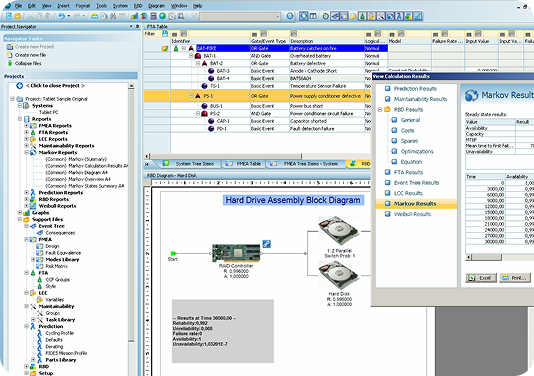
Winning a defense contract is only the first milestone. Keeping it and qualifying for the next one depends on whether your systems can prove they’ll perform when it matters most. For defense contractors and subcontractors, reliability engineering isn’t a nice-to-have; it’s a contractual obligation woven into every MIL-STD requirement, every Statement of Work, and every audit that follows.
Relteck provides defense reliability engineering consulting and DoD reliability testing services built specifically around the realities of government contracting: strict documentation standards, unforgiving mission environments, and zero tolerance for guesswork. Whether you’re a prime contractor managing a multi-year program or a subcontractor supplying a single critical component, our team helps you prove reliability with data, not assumptions.
Why Reliability Engineering Matters on Defense Programs
Military and government systems operate in conditions that push equipment to its limits extreme temperatures, constant vibration, shock loads, humidity, and long deployment cycles far from a repair depot. A failure in the field isn’t just a warranty claim; it can jeopardize a mission or put personnel at risk. That’s why the Department of Defense builds reliability requirements directly into procurement contracts, and why program managers increasingly demand reliability data before, during, and after production.
Reliability engineering gives your program three things a defense customer expects to see: predictable performance over the system’s lifecycle, documented evidence that requirements were engineered in rather than tested in after the fact, and a defensible paper trail if a failure investigation is ever required.
MIL-STD Reliability Requirements
Defense contracts routinely reference a family of military standards that govern how reliability must be planned, demonstrated, and reported. Relteck’s engineers work across the standards most commonly cited in DoD solicitations, including:
- MIL-STD-785– Reliability Program for Systems and Equipment, covering the reliability tasks a contractor must execute across a program’s lifecycle.
- MIL-HDBK-217– A long-standing methodology for predicting component and system failure rates, still referenced on many legacy and hybrid programs.
- MIL-STD-810– Environmental engineering considerations and laboratory test methods for equipment exposed to shock, vibration, altitude, humidity, and temperature extremes.
- MIL-STD-2155– Failure Reporting, Analysis, and Corrective Action System (FRACAS) requirements for tracking and resolving failures across a program.
We help contractors interpret which standards apply to their specific contract language, build a reliability program plan that satisfies the requirement, and generate the documentation your contracting officer or prime will actually ask to see.
DoD Contract Compliance Needs
Compliance on a defense contract goes beyond passing a test it means demonstrating, in writing, that reliability was engineered into the design from the start. Relteck supports contractors through:
- Reliability program plans tailored to the specific DoD contract or subcontract requirements
- MTBF (Mean Time Between Failures) predictions using recognized methodologies accepted by defense customers
- Test planning and execution that maps directly to contract deliverables and CDRL requirements
- Documentation packages formatted for review by government program offices, primes, and auditors
- Support navigating registrations and frameworks that intersect with reliability data, including NIST SP 800-171A and CMMC-related documentation practices
Relteck itself operates as a NIST SP 800-171A compliant firm with active DoD registrations in SAM, PIEE, and SPRS, and is ITAR compliant meaning we understand the compliance landscape our defense clients operate in, not just the engineering side of it.
RAM (Reliability, Availability, Maintainability) Planning
Many DoD contracts require a combined RAM approach rather than reliability in isolation. Reliability tells you how long a system runs before failure. Availability tells you how much of the time it’s actually mission-ready, accounting for maintenance and logistics. Maintainability tells you how quickly and cost-effectively a failure can be repaired in the field.
Relteck builds integrated RAM plans that address all three simultaneously, because a defense system that’s highly reliable but takes days to repair in a forward-deployed environment still fails the mission. Our RAM planning process typically includes:
- Defining RAM requirements directly from contract language and mission profiles
- Allocating reliability budgets down to the subsystem and component level
- Modeling maintainability tasks and repair timelines against logistics constraints
- Running availability calculations that account for realistic sparing, downtime, and duty cycles
- Delivering a RAM report formatted for program reviews and milestone gates
Case Examples with Defense Clients
Relteck has supported reliability programs for organizations across the defense and aerospace supply chain, including engagements with companies such as Amphenol Aerospace, OWL Cyber Defense, and Intersoft Electronics. In one representative engagement, an engineering team supplying antenna products needed MTBF calculations delivered on a tight program timeline; Relteck turned around accurate calculations and audit-ready reports without slowing the client’s schedule. In another program, our team supported a defense supplier through multiple rounds of customer-driven corrections and revisions, staying engaged directly with both the contractor and their end customer until the deliverable was accepted. These engagements reflect the kind of hands-on, responsive support defense contractors need when reliability data is tied directly to contract milestones.
Why Defense Contractors Choose Relteck
Government reliability requirements are dense, and getting them wrong can mean rework, schedule slips, or a failed audit. Relteck’s engineers translate MIL-STD language into a practical reliability program, run the calculations and testing your contract requires, and hand you documentation that stands up to scrutiny from your prime contractor or your government customer. We work as an extension of your engineering team, not a black box you get visibility into methodology, not just a final number.
If your program needs MTBF predictions, MIL-STD-compliant reliability testing, FRACAS support, or a full RAM plan, Relteck can build a scope around your contract’s exact requirements.
Ready to strengthen your program’s reliability posture? Talk to a Relteck reliability engineer or call 408-420-4983.