When a product fails in the field or on the production line, the instinct is often to fix the visible symptom and move on. But without identifying the true underlying cause, the same failure tends to resurface, often at a worse time and a higher cost. RelTeck’s root cause failure analysis services are built to stop that cycle. We combine structured investigative frameworks, laboratory failure analysis, and statistical rigor to trace failures back to their true origin, whether that origin is a design flaw, a material defect, a manufacturing process variation, or a misuse condition, so our clients can implement corrective actions that actually prevent recurrence.
Root Cause Failure Analysis, commonly abbreviated RCFA, is a disciplined problem-solving methodology used across manufacturing, electronics, automotive, aerospace, medical device, and industrial sectors to systematically investigate why a product, component, or system failed. Rather than treating failure analysis as a one-time inspection, RelTeck approaches RCFA as a repeatable engineering process, one that produces evidence-based conclusions engineering teams, quality managers, and customers can trust.
The RCFA Process and Framework
A credible root cause investigation follows a defined framework rather than an ad hoc inspection. RelTeck’s RCFA process is structured around the following stages:
Problem definition: Clearly document what failed, when, where, and under what conditions, including the failure mode observed and the operational context at the time of failure.
Data and evidence collection: Gather physical evidence, test records, environmental data, maintenance logs, and witness or operator statements before evidence degrades or is lost.
Failure mode identification: Perform physical and visual inspection, often supported by microscopy, electrical testing, or metallurgical analysis, to characterize exactly how the part or system failed.
Root cause hypothesis generation: Apply structured techniques such as the 5 Whys, Fishbone (Ishikawa) diagrams, or Fault Tree Analysis to map possible contributing factors and narrow them to the most probable root cause.
Verification testing: Where possible, reproduce the failure mechanism under controlled conditions or perform confirmatory testing to validate the identified root cause rather than relying on inference alone.
Corrective and preventive action planning: Translate the confirmed root cause into specific design, process, supplier, or procedural changes, along with an implementation and verification plan.
Documentation and closure: Compile findings into a formal RCFA report suitable for internal quality records, customer communication, or regulatory submission, and track corrective actions through to effectiveness verification.
This framework mirrors recognized quality methodologies such as 8D, DMAIC, and ISO 9001-aligned corrective action processes, ensuring that RelTeck’s findings integrate directly into our clients’ existing quality management systems.
Common RCFA Techniques
Different failure scenarios call for different analytical tools. RelTeck’s engineers select and combine techniques based on the complexity of the failure and the number of contributing systems involved.
5 Whys
The 5 Whys technique is a simple but powerful method for drilling past surface-level symptoms. Starting with the observed failure, the investigator repeatedly asks ‘why did this happen’ until the causal chain reaches a true root cause rather than a contributing condition. While straightforward, the 5 Whys is most effective when paired with objective evidence at each step, which is why RelTeck always backs each ‘why’ with data, test results, or physical inspection findings rather than assumption.
Fishbone (Ishikawa) Diagram
The Fishbone or Ishikawa diagram organizes potential causes into major categories, typically Man, Machine, Material, Method, Measurement, and Environment, to ensure that the investigation considers every plausible contributing factor rather than fixating on the first plausible explanation. RelTeck uses Fishbone analysis in team-based investigation sessions, particularly for manufacturing and process-related failures where multiple systems interact.
Fault Tree Analysis
For complex or safety-critical failures, RelTeck applies Fault Tree Analysis (FTA), a top-down, logic-based technique that maps the failure event to all combinations of lower-level faults that could cause it, connected through AND and OR logic gates. FTA is especially valuable when a failure could result from multiple independent or combined causes, and it produces a visual, auditable model that supports both root cause identification and risk quantification.
Data Collection Methods
The reliability of any RCFA conclusion depends entirely on the quality of the evidence behind it. RelTeck applies a range of data collection methods depending on the failure type and available evidence:
Physical evidence preservation: Securing failed parts, retaining fracture surfaces, and preventing further degradation or contamination before laboratory analysis begins.
Failure site inspection: On-site visual inspection and photographic documentation to capture the failure in its original context, including surrounding components and environmental conditions.
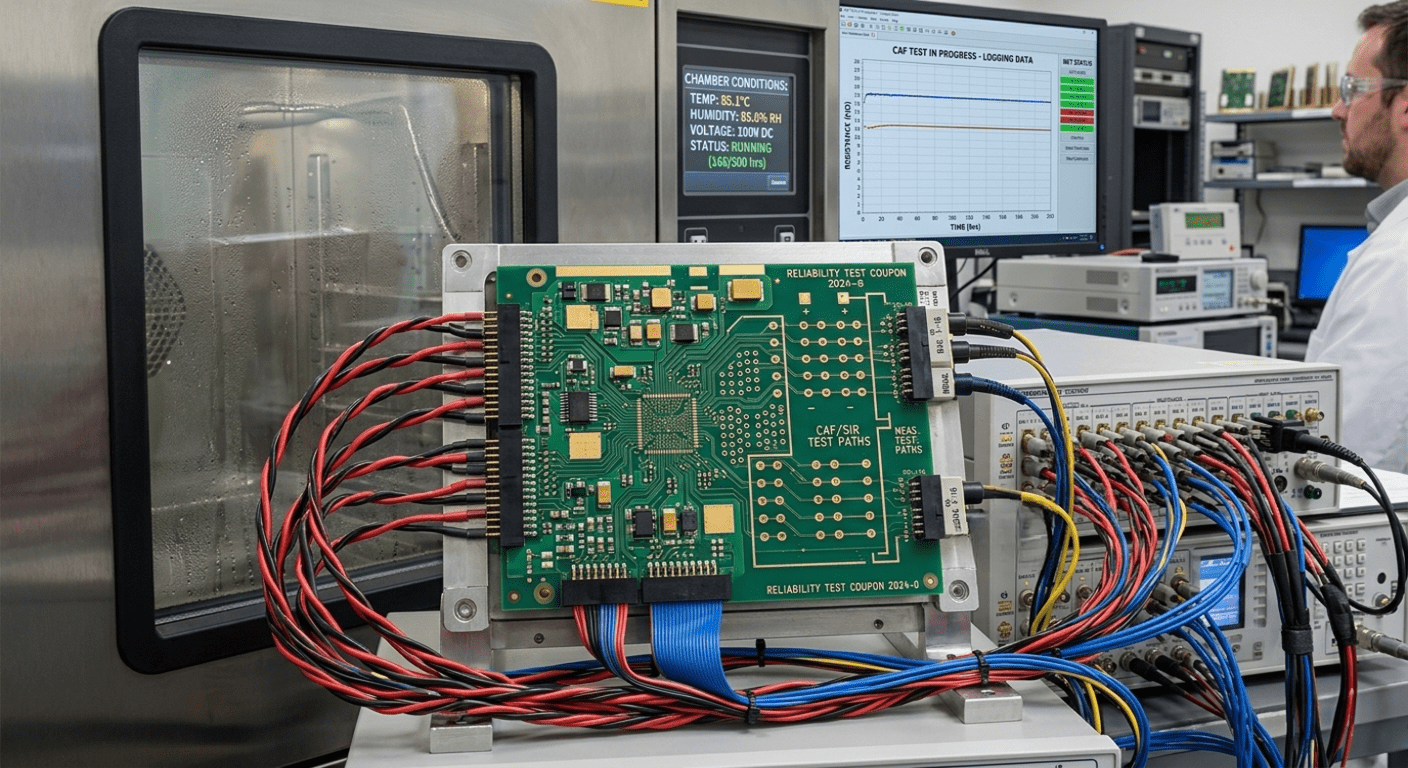
Laboratory failure analysis: Microscopy, scanning electron microscopy (SEM), energy-dispersive X-ray spectroscopy (EDS), metallurgical sectioning, and electrical testing to characterize the failure mechanism at a material and component level.
Historical and process data review: Analyzing production records, process control charts, incoming material inspection records, and prior warranty or complaint data for patterns.
Interviews and operational review: Structured interviews with operators, technicians, or end users to capture usage conditions, maintenance history, and events preceding the failure.
Environmental and usage data: Reviewing temperature, humidity, load, or duty-cycle data where available, particularly for field failures where actual use conditions may differ from design assumptions.
RelTeck treats data collection as a chain-of-custody discipline, documenting how evidence was gathered, handled, and analyzed so that findings hold up under customer, supplier, or regulatory scrutiny.
Corrective Action Planning
Identifying a root cause only delivers value if it leads to a corrective action that prevents recurrence. RelTeck structures corrective action planning around three connected outcomes:
Immediate containment: Address the current failure, including any affected inventory, field units, or in-process material, to limit further impact.
Root cause corrective action: Implement the design, process, material, or procedural change directly tied to the confirmed root cause, not merely the failure symptom.
Preventive action and verification: Extend the corrective action to other products or processes that share the same design or process element, then verify effectiveness through follow-up testing, monitoring, or audit.
Every RCFA engagement concludes with a clear owner, timeline, and verification method assigned to each corrective action, so the investigation produces measurable, trackable outcomes rather than a report that sits on a shelf.
Example Failure Scenario Walkthrough
To illustrate how these elements come together, consider a representative scenario RelTeck regularly encounters: a batch of electronic control units returned from the field with intermittent power loss after approximately six months of service.
Problem definition: Field data showed a cluster of returns from units manufactured in the same production week, all exhibiting intermittent power loss under vibration or thermal cycling.
Data collection: RelTeck secured returned units, pulled production and incoming inspection records for that week, and reviewed field environmental data showing higher-than-typical vibration exposure in the affected application.
Failure mode identification: Cross-sectioning and microscopy revealed micro-cracking in solder joints on a specific connector, consistent with thermomechanical fatigue rather than a component defect.
Root cause analysis: A Fishbone diagram grouped potential causes across Method, Material, and Machine categories; the 5 Whys traced the cracking to a reflow oven temperature profile that had drifted outside specification during that production week, which was confirmed against process control records.
Verification: RelTeck reproduced accelerated thermal cycling on control samples built with the out-of-spec profile, confirming that the drifted profile alone reproduced comparable solder joint cracking.
Corrective action: The client recalibrated and added automated monitoring to the reflow oven’s temperature profile, screened remaining inventory from the affected production week, and updated the process control plan to flag future drift before it reaches production.
Outcome: Field return rates for the affected unit returned to baseline within the following two production cycles, and the corrective action was documented and closed out with verification data attached.
This walkthrough reflects the level of rigor RelTeck applies to every engagement: physical evidence, structured causal analysis, and verification testing combine to produce a root cause finding that stands up to scrutiny and a corrective action that measurably resolves the issue.
Why Choose RelTeck for Root Cause Failure Analysis
RelTeck pairs experienced failure analysis engineers with in-house laboratory capabilities and structured RCFA frameworks to deliver findings that hold up under customer audits, regulatory review, and internal quality systems. Whether the failure involves a single field return or a systemic production issue, our team works quickly to preserve evidence, identify the true root cause, and help you implement corrective actions that stop the failure from recurring.